
Praying for Souls in Purgatory
″The practice of recommending to God the souls in Purgatory, that He may mitigate the great pains which they suffer, and that He may soon bring them to His glory, is most pleasing to the Lord and most profitable to us. For these blessed souls are His eternal spouses, and most grateful are they to those who obtain their deliverance from prison, or even a mitigation of their torments. When, therefore, they arrive in Heaven, they will be sure to remember all who have prayed for them.″
Jesus asked St Faustina to bring to him the souls detained in purgatory and immerse them in the abyss of his Mercy (Diary #1226).
He said, “All these souls are greatly loved by Me. They are making retribution to My justice. It is in your power to bring them relief”.
Souls in purgatory are unable pray for themselves, they must rely entirely on others to pray and make sacrifices on their behalf.
Prayers for the faithful departed pleases God, who uses our supplications to purify these souls that he loves.
It is an act of mercy on our part to for those we have known and loved, for those who are not remembered, and for those who have no one else to pray for them.
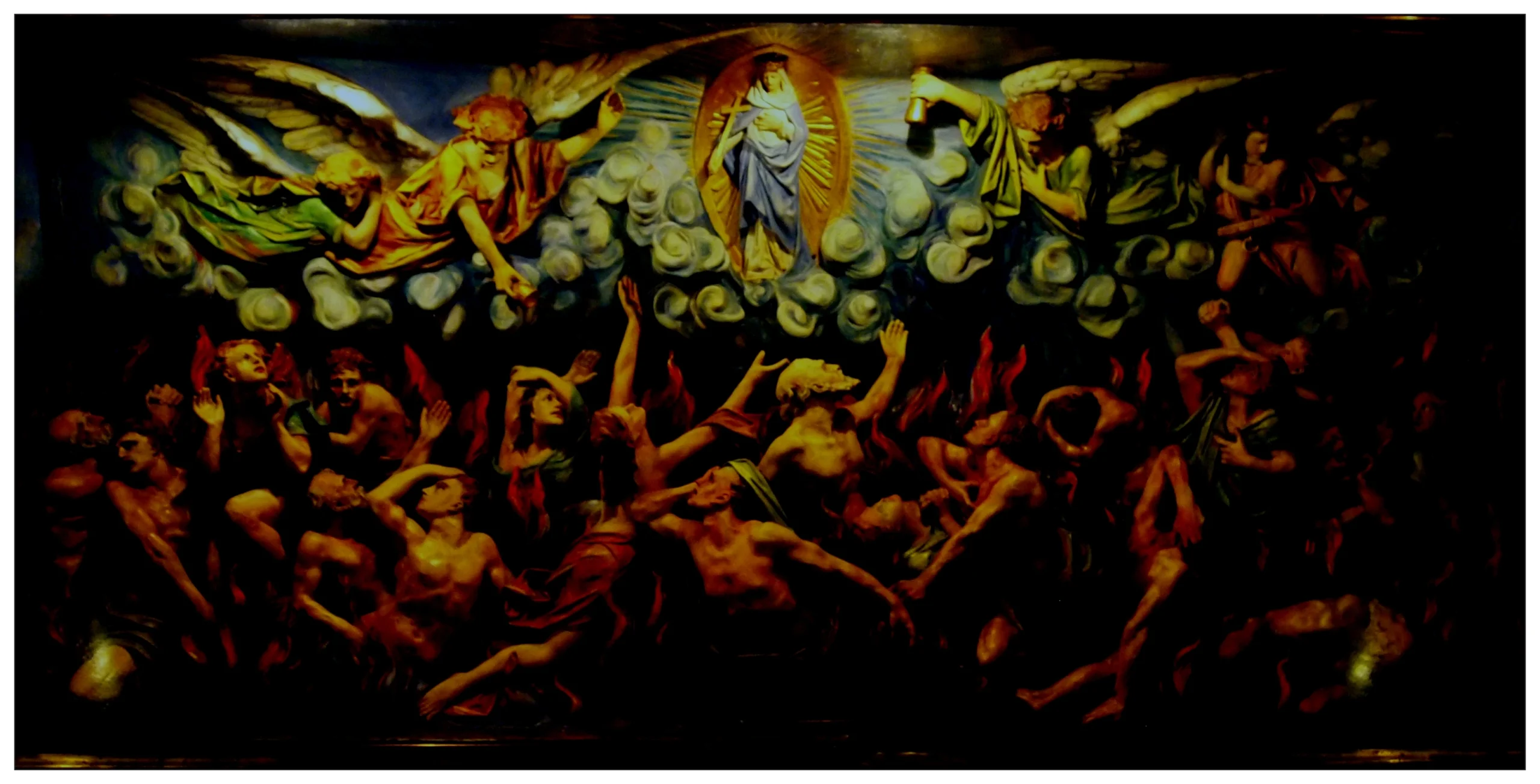
The bas-relief sculpture on the façade of the Capela das Ánimas—Chapel of the Souls, a neoclassical church built in the late 18th century in Santiago de Compostela, Spain.
(More details in the ART section of our LIBRARY)
Summary of Catholic practices on praying for souls in purgatory
Praying for souls in purgatory is a significant practice within the Catholic Church. It exemplifies the faith’s communal and compassionate nature, emphasizing the interconnectedness of all members of the Church, both living and deceased. Below are several reasons why we engage in this practice:
Theological Foundation
In Catholic doctrine, purgatory is understood as a transitional state where souls undergo purification before entering heaven. Prayers offered by the living assist these souls in completing their purification process. This belief is rooted in scriptural references and early Church teachings.
Scriptural Justification
Although the term “purgatory” is not explicitly mentioned in the Bible, several passages suggest a purification process after death. For example, 2Maccabees 12:45 discusses prayers for the dead, indicating that this practice was part of early Jewish tradition. Additionally, 1Corinthians 3:15 and Matthew 12:32 imply the existence of post-mortem purification.
Church Tradition and Teachings
The tradition of praying for the deceased has been upheld by the Church since its inception. The Catechism of the Catholic Church (CCC) states that those who die in God’s grace and friendship but are not yet fully purified undergo purification to achieve the holiness necessary to enter heaven (CCC §§1030-1032). This practice is particularly emphasized during All Souls’ Day and in Masses offered for the deceased.
Spiritual Works of Mercy
Praying for souls in purgatory is considered a spiritual work of mercy. It is an act of charity, as it involves interceding for those who are unable to pray for themselves. By offering prayers, sacrifices, and indulgences, we can aid these souls in attaining the beatific vision. This act of kindness benefits both the souls in purgatory and those praying for them, fostering growth in virtue and compassion.
Interconnection of the Church
The Catholic Church teaches the concept of the Communion of Saints, which encompasses the Church Militant (the faithful on earth), the Church Suffering (the souls in purgatory), and the Church Triumphant (the saints in heaven). This doctrine emphasizes the spiritual solidarity and mutual support among all members of the Church. Praying for souls in purgatory is a way for the us to express their solidarity with these departed souls and to share in the responsibility of helping each other attain eternal salvation.
Personal and Familial Connections
Many of us feel a personal connection to the practice of praying for souls in purgatory, particularly when it involves deceased family members and friends. This tradition allows them to honor their loved ones, express their love and concern, and hope for their eternal peace. It provides comfort and reassurance that our prayers can make a difference in the spiritual journey of the departed.
Liturgical Practices
The praying for the souls in purgatory is included in the Eucharistic celebrations, especially during the commemoration of All Souls’ Day on November 2nd. Special Mass intentions are offered for the deceased, and various prayers, such as the ‘Eternal Rest…’ prayer, are recited to seek God’s mercy and grace for the souls in purgatory.
Praying for souls in purgatory is a profound expression of Catholic faith and charity. It reflects the belief in the Communion of Saints, the importance of spiritual solidarity, and the hope for eternal salvation for all members of the Church. Through our prayers, we can assist the departed in their journey towards the ultimate union with God, thereby fostering a sense of compassion, responsibility, and spiritual interconnection within the faith community.
Summary of Catholic practices
Praying for souls in purgatory is a significant practice within the Catholic Church. It exemplifies the faith’s communal and compassionate nature, emphasizing the interconnectedness of all members of the Church, both living and deceased. Below are several reasons why we engage in this practice:
Theological Foundation
In Catholic doctrine, purgatory is understood as a transitional state where souls undergo purification before entering heaven. Prayers offered by the living assist these souls in completing their purification process. This belief is rooted in scriptural references and early Church teachings.
Scriptural Justification
Although the term “purgatory” is not explicitly mentioned in the Bible, several passages suggest a purification process after death. For example, 2Maccabees 12:45 discusses prayers for the dead, indicating that this practice was part of early Jewish tradition. Additionally, 1Corinthians 3:15 and Matthew 12:32 imply the existence of post-mortem purification.
Church Tradition and Teachings
The tradition of praying for the deceased has been upheld by the Church since its inception. The Catechism of the Catholic Church (CCC) states that those who die in God’s grace and friendship but are not yet fully purified undergo purification to achieve the holiness necessary to enter heaven (CCC §§1030-1032). This practice is particularly emphasized during All Souls’ Day and in Masses offered for the deceased.
Spiritual Works of Mercy
Praying for souls in purgatory is considered a spiritual work of mercy. It is an act of charity, as it involves interceding for those who are unable to pray for themselves. By offering prayers, sacrifices, and indulgences, we can aid these souls in attaining the beatific vision. This act of kindness benefits both the souls in purgatory and those praying for them, fostering growth in virtue and compassion.
Interconnection of the Church
The Catholic Church teaches the concept of the Communion of Saints, which encompasses the Church Militant (the faithful on earth), the Church Suffering (the souls in purgatory), and the Church Triumphant (the saints in heaven). This doctrine emphasizes the spiritual solidarity and mutual support among all members of the Church. Praying for souls in purgatory is a way for the us to express their solidarity with these departed souls and to share in the responsibility of helping each other attain eternal salvation.
Personal and Familial Connections
Many of us feel a personal connection to the practice of praying for souls in purgatory, particularly when it involves deceased family members and friends. This tradition allows them to honor their loved ones, express their love and concern, and hope for their eternal peace. It provides comfort and reassurance that our prayers can make a difference in the spiritual journey of the departed.
Liturgical Practices
The praying for the souls in purgatory is included in the Eucharistic celebrations, especially during the commemoration of All Souls’ Day on November 2nd. Special Mass intentions are offered for the deceased, and various prayers, such as the ‘Eternal Rest…’ prayer, are recited to seek God’s mercy and grace for the souls in purgatory.
Praying for souls in purgatory is a profound expression of Catholic faith and charity. It reflects the belief in the Communion of Saints, the importance of spiritual solidarity, and the hope for eternal salvation for all members of the Church. Through our prayers, we can assist the departed in their journey towards the ultimate union with God, thereby fostering a sense of compassion, responsibility, and spiritual interconnection within the faith community.